
Baghdad’s Construction Boom: What Is Driving It?
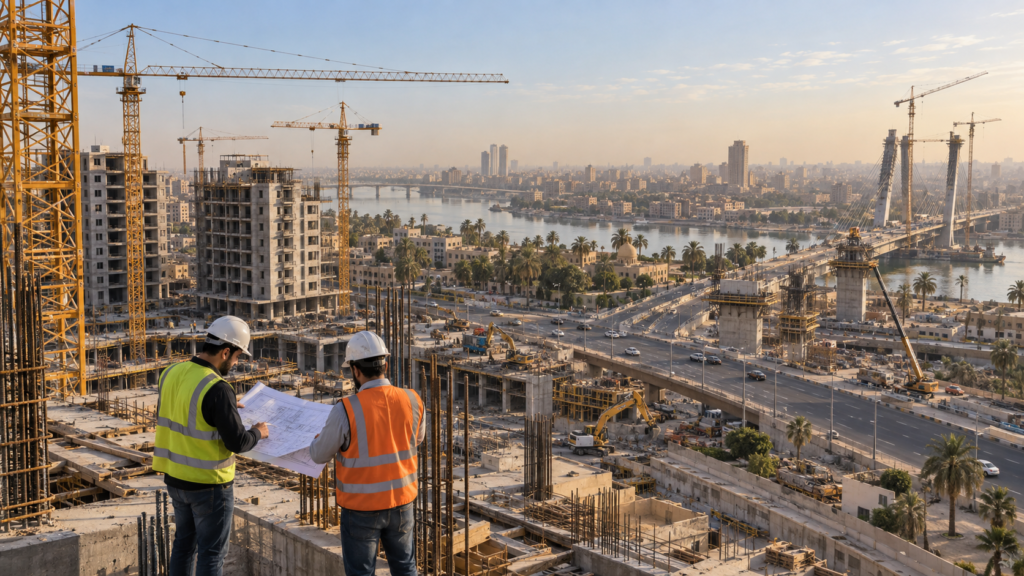
Baghdad is experiencing one of its most visible periods of construction and urban expansion in decades. New housing developments, road projects, bridges, commercial buildings, public facilities, and major transport proposals are changing the appearance of the Iraqi capital and its surrounding areas.
The activity reflects several overlapping pressures: a growing population, a substantial housing shortage, severe traffic congestion, rising demand for modern commercial space, and increased government spending on infrastructure.
For construction companies and suppliers, the expansion is creating opportunities across engineering, building materials, equipment, transportation, project management, and professional services. However, the market also faces challenges involving affordability, infrastructure capacity, planning, financing, and project delivery.
Population Growth and Housing Demand
Housing demand is one of the largest forces behind Baghdad’s construction market. The capital continues to attract people seeking employment, education, healthcare, and government services. At the same time, household formation and population growth have increased demand for apartments and houses.
Iraq’s housing deficit is commonly estimated in the millions of units nationwide. Baghdad carries a significant portion of that shortage, creating pressure on both established neighborhoods and undeveloped land around the city.
The government’s National Housing Policy 2025–2030 aims to expand housing supply while improving urban planning, infrastructure, affordability, and access to finance. The policy treats housing as more than the construction of individual buildings; it also emphasizes roads, water, electricity, schools, healthcare, and community services.
Large residential developments around Baghdad are intended to absorb part of this demand. Bismayah New City, southeast of the capital, remains one of Iraq’s most prominent housing projects, with a long-term plan for approximately 100,000 residential units. Additional new-city projects have also been proposed or launched around Baghdad and other provinces.
Roads, Bridges and Traffic Pressure
Baghdad’s road network was not designed for its current population or volume of vehicles. Traffic congestion affects daily travel, commercial deliveries, emergency services, and workforce productivity.
Recent infrastructure programs have therefore focused heavily on bridges, intersections, expressways, underpasses, and road improvements. These projects are intended to remove bottlenecks and improve connections between Baghdad’s neighborhoods.
Transport investment is also expanding nationally. In June 2026, the World Bank announced a $900 million financing package to improve Iraqi road infrastructure and make transportation safer and more reliable. Although the program is national, improved connections between Baghdad and other provinces can strengthen the capital’s role as Iraq’s primary commercial and administrative center.
A proposed Baghdad Metro represents the most ambitious long-term response to the city’s congestion. International companies have been selected for the planned system, which would connect major areas of Baghdad through multiple lines and stations. The metro remains a complex project requiring substantial financing and execution capacity, but it illustrates the scale of the capital’s transportation needs.
Public and Commercial Construction
The construction expansion is not limited to housing and roads. Baghdad is also seeing investment in office buildings, hotels, shopping centers, hospitals, schools, sports facilities, restaurants, and mixed-use developments.
Modern retail and hospitality projects are responding to changing consumer expectations. Iraqi customers increasingly seek organized shopping environments, branded restaurants, entertainment venues, and integrated residential communities.
Government institutions are also developing new administrative and public buildings. High-profile projects, including the new Central Bank of Iraq headquarters designed by Zaha Hadid Architects, symbolize Baghdad’s effort to reintroduce large-scale contemporary architecture to its skyline.
The combination of public works and private development is creating demand for architectural design, structural engineering, mechanical and electrical systems, elevators, fire protection, air conditioning, security systems, landscaping, and facility management.
Opportunities Across the Supply Chain
Construction activity creates a broad market beyond the main contractor. Every major development requires cement, steel, glass, cables, pipes, insulation, lighting, flooring, sanitary fixtures, air-conditioning equipment, construction machinery, and safety products.
There are also opportunities for companies providing surveying, geotechnical investigation, environmental assessment, quality inspection, scheduling, cost control, and project-management services.
Foreign suppliers can enter the market through Iraqi distributors, local representatives, joint ventures, or direct participation in major projects. However, reliable local partnerships are particularly important for navigating registration, customs procedures, tender requirements, staffing, transportation, and payment practices.
Companies that can provide training, warranties, spare parts, and after-sales support may have an advantage over suppliers focused only on the initial sale.
Challenges Behind the Expansion
Visible construction does not automatically produce well-planned urban development. New residential projects require dependable electricity, water, sewage, roads, schools, and healthcare. If supporting infrastructure is delayed, housing units may be completed before communities are fully functional.
Affordability is another concern. Luxury and upper-middle-market developments may attract investment, but they do not necessarily address the needs of average-income families. Access to mortgages and long-term housing finance remains limited compared with more developed property markets.
Contractors must also manage changing material costs, imported equipment, customs delays, land issues, administrative approvals, and payment risk. These factors can affect schedules and project budgets.
Preserving Baghdad’s architectural heritage presents an additional challenge. Rising land values and redevelopment pressure have led to the loss of some historic buildings. Future growth will require a better balance between modernization and protection of the city’s cultural identity.
Market Outlook
Baghdad’s construction activity is being driven by real and long-term needs. The capital requires more housing, better transportation, upgraded utilities, modern public facilities, and additional commercial space.
The strongest opportunities will likely be found in projects that combine buildings with complete supporting infrastructure. Demand should remain significant for contractors, engineering firms, building-material suppliers, equipment providers, and professional-service companies capable of meeting recognized technical and safety standards.
The scale of construction signals confidence in Baghdad’s economic potential, but the quality of planning and execution will determine whether today’s projects create lasting value. If investment is coordinated with transportation, utilities, affordability, and urban services, the current expansion could become a genuine transformation of the Iraqi capital.
Sources: United Nations Iraq – National Housing Policy 2025–2030 · World Bank – Financing for Iraq’s Road Infrastructure · Reuters – Baghdad Metro Consortium · Iraq Development Fund